by Lorato | Aug 20, 2026 | All News, Alumni, SMU Media, Student Media
Sefako Makgatho Health Sciences University (SMU) student leader and Diagnostic Radiography junior researcher, Enos Motaka Malatji, is set to represent the university at the Pan African Youth Conference 2026 on Health, Innovation, and Agenda 2063, scheduled to take place from 2 to 4 September 2026 in Addis Ababa, Ethiopia.
 Hosted by the African Union, the conference will bring together young leaders, innovators and professionals at the African Union Headquarters to advance youth-led approaches to health equity, technological innovation and sustainable development. Participants are expected to contribute to policy frameworks, digital health initiatives and efforts to accelerate universal health coverage.
Malatji, who serves as a National Student Representative for the Society of Radiographers of South Africa (SORSA), said the opportunity was both a personal milestone and a platform for contributing to discussions shaping the continent’s future. “I have always possessed a mentality of appreciation for everything because I’ve seen the Grace carrying me throughout. Even this one, I appreciate. But everyone must know that what comes out is a product of what you have put in,” he said. For me, it is not a matter of luck; it is dedication and hard work that open such great doors.”
At the conference, Malatji intends to present two scientific papers addressing important issues in healthcare. His studies focus on the role of artificial intelligence in improving health outcomes and the evaluation of system determinants of preventable patient deaths.
The opportunity is supported by several structures within SMU, including the SMU Internationalisation Directorate, the School of Medicine and the Radiography Department. Their support reflects the university’s commitment to creating opportunities for students to participate in international academic and professional platforms.
“The SMU Internationalisation Directorate believes that by supporting local students in having an international experience, we assist the university in graduating global citizens, able to work anywhere in the world. Mr Malatji will be presenting at an international conference, which is an achievement to be celebrated. He has shown a commitment to sharing his academic curiosity not only with the world, but also on our campus. This is evident from his 2025 achievement at our SMU Research Days, where he was awarded 1st Prize,” said Dr Carlien Jooste, Director of Internationalisation at SMU.
Malatji’s involvement extends beyond research. He co-founded the SMU Radiography Student Organisation and chaired its advisory committee, while his national role with SORSA has positioned him as a student voice within the Radiography profession. He has also been involved in victim empowerment, anti-violence campaigns and campus student ministry.
His upbringing in rural Limpopo has shaped his journey to the international stage. Malatji said his background taught him that circumstances should not determine the limits of a person’s ambitions. “Whatever you do best, you can become a star. That is regardless of who gave birth to you, where and when,” he said. “I also come from a dusty village in rural Limpopo. Like many African children, I had no secondary school in my village, so I had to travel every day to Manoke for education. Despite the economic challenges, I still made it this far, so it is possible.”
Malatji has previously presented an undergraduate case report on the effect of patient autonomy on successful diagnosis and treatment at the SORSA-IAFR Congress in Cape Town and has helped organise professional development and continuing professional development symposia that connect students with medical imaging professionals.
His participation in the Pan African Youth Conference aligns with SMU’s commitment to excellence, innovation, student-centred development and the training of health professionals equipped to contribute to society. The university’s mission emphasises excellence in teaching, learning and innovative research, while its vision centres on transforming health services through excellence and innovation.
As Malatji prepares to bring his research interests and student leadership experience to the African Union platform, his journey demonstrates the potential of young South African health professionals to contribute to continental conversations on healthcare, technology, and sustainable development.
By Tumelo Moila.

by Lorato | Aug 20, 2026 | Accolades and Achievements, All News, Alumni, SMU Media, Student Media
Mathematics is more than formulas, calculations and finding the correct answer. It is a discipline that demands curiosity, logical reasoning, persistence and the confidence to approach unfamiliar problems. These qualities are at the heart of the Siyanqoba Mathematics Olympiad Training Programme, implemented through a strategic collaboration between Sefako Makgatho Health Sciences University (SMU) and the South African Mathematics Foundation (SAMF).
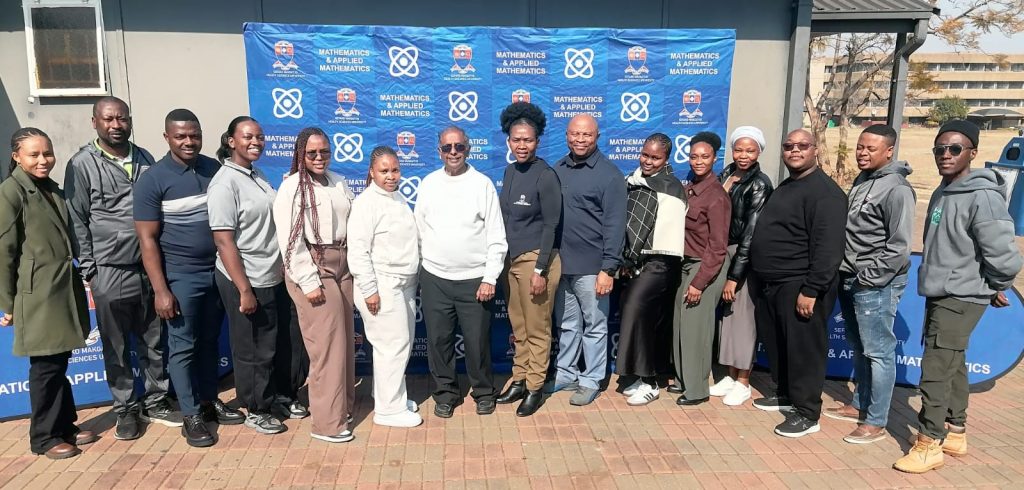 The programme is designed for high school learners who demonstrate aptitude and enthusiasm for mathematics, with a strong emphasis on mathematical problem-solving rather than the routine questions that often dominate the school curriculum. It exposes learners to mathematical concepts and enrichment material beyond the prescribed curriculum while seeking to strengthen South Africa’s competitiveness in mathematics.
According to Patrick Rasehwete, Engagement and Project Manager at SAMF, the programme seeks to address an important gap in mathematics education. “The Siyanqoba Mathematics Olympiad Training Programme is an outreach programme for high school students throughout the country who show particular ability and interest in mathematics. The programme concentrates on developing mathematical problem-solving skills, unlike in regular school curricula where the focus is more on solving routine-type questions,” said Rasehwete.
He explained that the programme places considerable emphasis on conceptual understanding rather than memorisation. “The emphasis is on the understanding of mathematical concepts rather than pure memorisation of formulae. It furthermore covers enrichment material which is not in the school curriculum and aims to improve our competitiveness internationally,” he said.
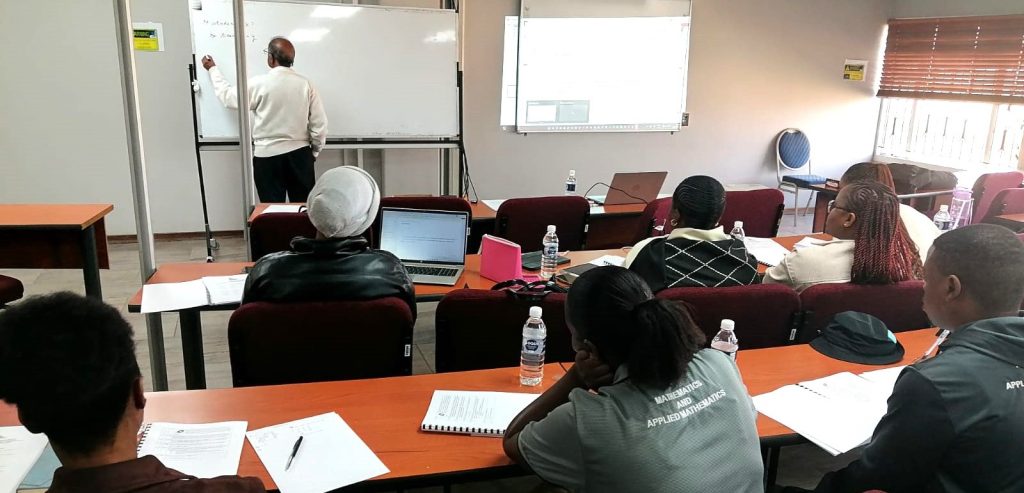 The Siyanqoba Centre at SMU is initially supporting Grade 8 to Grade 10 learners from participating secondary schools, including Kgatoentle Secondary Leap Mathematics and Science School and Modiri High School. The learners were selected after completing a selection assessment, while the schools’ longstanding collaboration with SMU was an important consideration in establishing the programme.
For Nthati Innocentia Xaba, an MSc Mathematics student, the training provides an opportunity to engage with mathematics beyond conventional classroom approaches. Her perspective highlights the importance of creating opportunities for mathematics students and educators to engage with problem-solving approaches that encourage deeper mathematical thinking and build confidence.
The two-day training programme held at SMU primarily focused on preparing educators, coaches and tutors who will work with the selected learners. Rather than concentrating exclusively on mathematical content, the training equips facilitators with strategies to help learners navigate complex and unfamiliar problems. “The two-day training is an essential orientation programme for facilitators, namely coaches, tutors and teachers who will be providing lessons to the identified learners,” Rasehwete said. “The training will provide facilitators with various strategies to use when dealing with learners.”
Participants engaged in problem-solving activities designed to deepen their understanding of mathematical reasoning and the processes involved in tackling challenging questions. Mathematical thinking, mathematical modelling, and the control of the problem-solving process were among the areas explored during the training.
The programme was facilitated by Emeritus Professor Poobhalan Pillay, appointed by SAMF as Academic Coordinator of the Siyanqoba Mathematics Olympiad Programme. Pillay brings extensive experience in mathematics education, having lectured for 40 years at the former University of Durban-Westville and the University of KwaZulu-Natal.
The programme also responds to structural challenges affecting mathematics education in South Africa. “Learners do not have enough resources to deal with problem-solving strategies, and teachers are victims of their own previous education and are likely to continue to teach the way they were taught, by focussing on routine problems unless a way is found to interrupt this self-perpetuating cycle,” Rasehwete said.
For SMU, the initiative represents a significant extension of its community engagement mandate. It provides the university with an opportunity to contribute to mathematics education while supporting schools and educators in surrounding communities.
By Dimakatso Modise
by Lorato | Aug 20, 2026 | All News, Alumni, SMU Media, Student Media
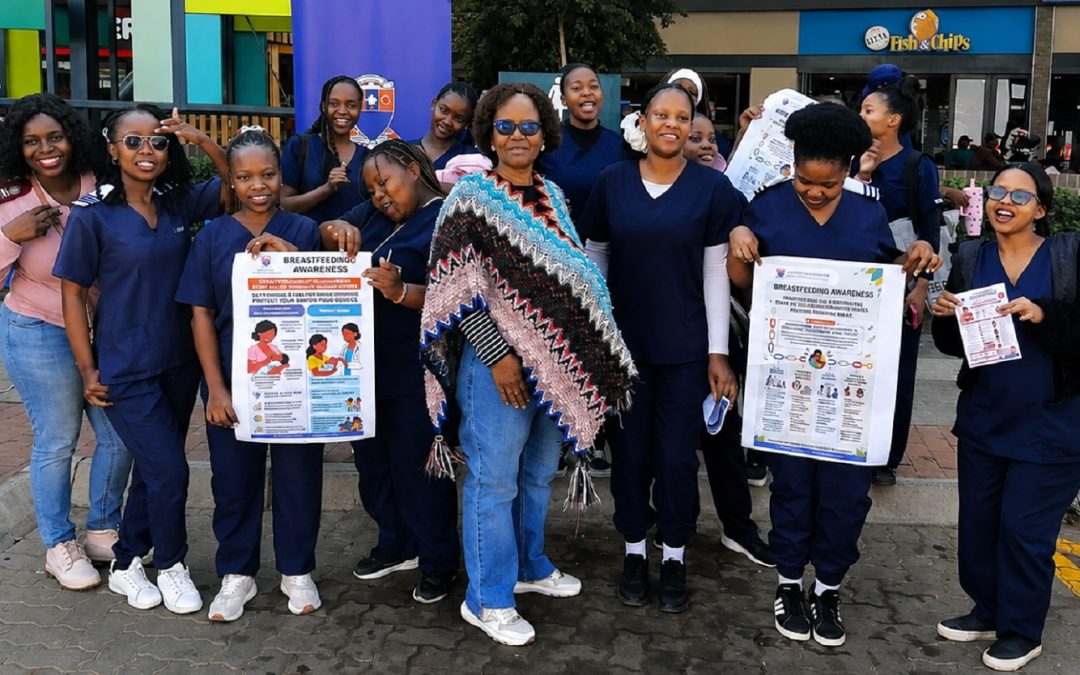
Sefako Makgatho Health Sciences University (SMU) nursing students have taken breastfeeding awareness into the community, using practical health education to promote informed support for mothers and babies.
 The initiative formed part of a Breastfeeding Day Celebration held at Hebron Mall during World Breastfeeding Week. Under the theme, “Breastfeeding for a Sustainable Start in Life: Strengthen What Works”, the event brought together nursing students, academic staff and community members to promote breastfeeding, provide counselling and address common misconceptions.
World Breastfeeding Week, supported globally by the World Health Organisation and UNICEF and endorsed by South Africa’s National Department of Health, highlights the importance of breastfeeding and the need for supportive environments that enable mothers to breastfeed.
The SMU programme opened with a welcome and overview by Mpho Kgoele, a Lecturer in Midwifery, who emphasised the need for accurate information and support. “Creating awareness is important because mothers, partners and families need access to accurate information and appropriate support when it comes to breastfeeding,” Kgoele said.
Information stalls provided community members with opportunities to interact directly with nursing students, seek advice and receive breastfeeding counselling. The engagement allowed students to apply their academic knowledge in a real-world setting while responding to public questions and concerns.
Interactive activities formed an important part of the programme. Bachelor of Nursing and Midwifery (BNAM) third- and fourth-year students presented a partner-support drama skit illustrating the role families can play in supporting breastfeeding mothers.
 The students also facilitated a myth-busting quiz designed to help participants distinguish between common misconceptions and accurate breastfeeding information.
Maite Seabi, a BNAM third-year student, said the community engagement provided an opportunity for students to connect their classroom learning with practical health education. “Engaging directly with community members showed us the importance of communicating health information in a way that people can understand and relate to,” Seabi said.
The event also highlighted the importance of recognising breastfeeding as a shared responsibility. Partners, grandparents, siblings and other family members can help create an environment that supports mothers and babies.
Rudzingana Andani, a BNAM fourth-year student who participated in the myth-busting quiz, said interactive activities made it easier to communicate important health messages. “The myth-busting quiz allowed us to address common misconceptions while encouraging community members to participate and ask questions,” Andani said.
Dr Mashudu Tulelo, Lecturer in the Department of Nursing, welcomed the students’ active involvement and commended their commitment to community health education. “Our students demonstrated that their knowledge and skills can make a meaningful contribution beyond the classroom,” Tulelo said. “Community engagement gives them an opportunity to serve the public while developing as future healthcare professionals.”
The initiative reflected SMU’s institutional values, including Ubuntu, student-centredness, excellence, respect, integrity and accountability. By taking learning beyond the classroom, the programme demonstrated how community engagement can contribute to public health education while strengthening students’ professional development.
The celebration also reinforced the importance of breast milk as a source of nourishment and protection for babies, while emphasising that mothers should have access to support from their families, communities and healthcare professionals.
Through initiatives such as the Breastfeeding Day Celebration, SMU continues to integrate academic learning with community service and health promotion. The Department of Nursing’s participation in World Breastfeeding Week reinforced a central message: “supporting breastfeeding is everyone’s responsibility”, with families, communities and healthcare professionals all having a role in helping mothers and babies achieve a healthy start in life.
By Dimakatso Modise

by Lorato | Aug 20, 2026 | All News, Alumni, SMU Media, Student Media
Sefako Makgatho Health Sciences University (SMU) has appointed Busisiwe Mbanjwa as Manager: Gender-Based Violence (GBV) in the Human Capital and Transformation department, strengthening the university’s efforts to prevent and respond to gender-based violence across its community.
 Mbanjwa’s permanent appointment took effect on 1 August 2026, following more than two years in an acting capacity in the university’s GBV Office. She joined SMU in May 2020 as a Human Resources Business Partner and has since played an increasingly prominent role in strengthening the institution’s response to GBV.
Reflecting on her appointment, Mbanjwa said the permanent position would allow her to build on work already undertaken while strengthening systems designed to create a safer university environment.
“I am honoured to take on this responsibility permanently and to continue the work of strengthening SMU’s institutional response to gender-based violence. GBV prevention and response require sustained commitment, collaboration and accountability across the university community. My focus will be on ensuring that this work is embedded within the University’s broader institutional strategy, governance systems and transformation agenda.”
Mbanjwa brings more than 14 years of higher education experience, having worked at Nelson Mandela University, Rhodes University, the University of Mpumalanga and SMU. Her professional expertise includes strategic leadership, policy development and implementation, governance, quality assurance, stakeholder engagement, programme facilitation and institutional reporting.
She holds a Master of Business Administration, awarded cum laude, from the University of Johannesburg; a Bachelor of Commerce Honours in Human Resource Management from MANCOSA; and a Bachelor of Technology and a National Diploma in Human Resource Management from Nelson Mandela University.
Since assuming the acting GBV management role in June 2024, Mbanjwa has led initiatives to strengthen the University’s institutional response. These have included implementing the GBV policy framework, strengthening multidisciplinary case management, coordinating prevention and awareness programmes, strengthening institutional reporting, governance and accountability mechanisms, and developing partnerships with students, employees, University leadership and external stakeholders.
Mbanjwa said the University’s approach must focus on strengthening prevention, promoting positive behavioural change and fostering an institutional culture of dignity, respect and accountability, while ensuring effective responses to reported cases.
“Our responsibility is not only to respond appropriately when cases are reported, but also to strengthen prevention, awareness and education. Our interventions must be informed by institutional data, emerging trends and the realities experienced within our University community. We need to ensure that students and employees understand their rights, know where to seek support and have confidence in the systems established to assist them.
 In her new role, she will oversee the development, implementation, monitoring, and continuous improvement of programmes, policies, and interventions addressing GBV, harassment, discrimination, and related misconduct.
Her responsibilities will also include coordinating multidisciplinary case management, providing strategic direction to prevention and advocacy initiatives, strengthening institutional and external partnerships, monitoring the effectiveness and impact of GBV interventions, and ensuring alignment with relevant legislation and national higher education frameworks.
Mbanjwa said collaboration would remain central to the university’s efforts. “Addressing gender-based violence cannot be the responsibility of one office or one individual. It requires meaningful collaboration between students, employees, leadership and external partners. We must continue building a culture in which dignity, respect, safety and accountability are actively upheld.”
Her appointment aligns with SMU’s commitment to creating a safe, inclusive and respectful learning and working environment. The university’s values include accountability, effective leadership, integrity, respect, student-centredness and Ubuntu.
Mbanjwa said these principles provide an important foundation for the university’s GBV prevention and response work. “A safe and inclusive university environment is fundamental to learning, teaching, research and professional development. My priority is therefore to ensure that GBV is addressed not through isolated programmes or one-off interventions, but through a coordinated and sustainable institutional approach. This requires strong governance, accountability, evidence-informed decision-making, effective prevention and response systems, and the active participation of the entire University community. Our work must also ensure that students and employees are treated with dignity and have access to appropriate support and institutional mechanisms when concerns arise.”
Her appointment strengthens the GBV Office’s leadership and supports SMU’s broader commitment to safeguarding the dignity, wellbeing and safety of its students and employees.
As Manager: GBV, Mbanjwa will build on existing initiatives while advancing a coordinated and sustainable institutional approach to GBV, with a continued focus on prevention, effective response, governance, accountability and positive institutional culture.
By Tumelo Moila

by Lorato | Aug 20, 2026 | All News, Alumni, SMU Media
Sefako Makgatho Health Sciences University (SMU) has recently appointed Dorica Lucy Modisakeng as Head: Campus Cleaning in the Student Affairs Department, strengthening the university’s commitment to maintaining a clean, safe and welcoming environment for students, staff and visitors.

Modisakeng brings extensive experience in public service, facilities management and operational administration within government institutions. Her appointment adds significant leadership and operational expertise to an area that plays an important role in supporting the university’s academic and student experience.
She has held leadership positions at the Department of Environmental Affairs and Tourism, the Department of Tourism, and, most recently, the Office of the Chief Justice, where she oversaw facilities management and auxiliary services.
A focus on service excellence, operational efficiency and the development of safe and functional working environments has characterised her professional career. These areas align closely with SMU’s commitment to excellence, efficiency, accountability and student-centredness.
Modisakeng’s academic qualifications include a BAdmin Honours in Public Administration and a Bachelor of Administration from UNISA. She also holds an Advanced Diploma in Real Estate from the University of Johannesburg, a National Diploma in Real Estate from the Cape Peninsula University of Technology, a National Diploma in Public Management from UNISA and a Diploma in Marketing from the Institution of Marketing Management.
In her role, Modisakeng is responsible for planning, developing and implementing campus cleaning programmes and schedules designed to maintain high standards of hygiene, safety and environmental sustainability across SMU.
Her responsibilities include strengthening the implementation of policies and procedures, ensuring compliance with health and safety requirements, managing operational risks and providing leadership and mentorship to cleaning teams.
The position is central to ensuring that the university’s physical environment supports its core academic mission and provides students and employees with a learning, teaching, research, and professional development environment.
Commenting on the appointment, Modisakeng said the role would require a consistent focus on service delivery and the needs of the university community. “A clean and safe campus is an important part of creating an environment in which students and staff can learn, work and thrive. My focus will be on strengthening operational standards, supporting our cleaning teams and ensuring that the university community experiences reliable and professional service.”
She added that effective campus cleaning requires teamwork, accountability and attention to detail. “We must work together to maintain high standards across the university. This means having clear processes, supporting our teams and responding promptly to operational challenges while keeping hygiene, safety and sustainability at the centre of our work.”
The appointment supports SMU’s institutional values, which include accountability, effective leadership, efficiency, excellence, integrity, respect, student-centredness and Ubuntu. The university defines respect as honouring “the dignity of each person” while fostering a diverse, inclusive and safe community.
The role also contributes to SMU’s broader vision of “Transforming health services through excellence and innovation”. While campus cleaning is an operational function, its impact extends to the quality of the environment in which the university delivers professional health sciences education and conducts innovative research.
Through her experience in facilities management and auxiliary services, Modisakeng is strengthening operational coordination and helping maintain a campus environment that reflects SMU’s standards and institutional values.
Her appointment reinforces the university’s commitment to ensuring that its infrastructure and support services effectively complement its academic and student-focused mandate.
As SMU continues to advance its position as a leading health sciences university, maintaining safe, functional and welcoming facilities remains essential to supporting education, research, student development and the preparation of health professionals who contribute to the wellbeing of communities.
By Tumelo Moila.

by Lorato | Aug 12, 2026 | Accolades and Achievements, All News, Alumni, SMU Media, Student Media
Sefako Makgatho Health Sciences University (SMU) is celebrating a major innovation milestone after HepaSure Diagnostics, a student-led healthcare enterprise founded by Nondumiso Nkosi, was crowned the Enactus South Africa Early-Stage Competition Champion. The victory secures South Africa’s representation at the Enactus World Cup 2026 in São Paulo, Brazil, where the innovation will be showcased before a global audience of students, investors and business leaders.
 Founded by Nkosi, a medical scientist and student in the Department of Virology at SMU, HepaSure Diagnostics is developing an affordable, rapid and inclusive diagnostic solution for hepatitis B, with a particular focus on detecting occult hepatitis B infections—cases that often remain undetected by conventional screening methods. The innovation aims to improve early diagnosis, particularly in resource-constrained healthcare settings, while supporting global efforts to eliminate viral hepatitis.
The achievement reflects SMU’s commitment to transforming healthcare through research, innovation and entrepreneurship while empowering students to develop practical solutions to pressing public health challenges. “This achievement demonstrates what is possible when scientific research is combined with entrepreneurial thinking,” said Nondumiso Nkosi, founder of HepaSure Diagnostics. “Our goal has always been to ensure that people, particularly those in underserved communities, have access to accurate and affordable hepatitis B diagnostics. Representing South Africa at the Enactus World Cup is an incredible opportunity to showcase an innovation that has the potential to improve health outcomes both locally and globally.”
The victory marks the culmination of a journey that began when HepaSure Diagnostics joined the Enactus SMU programme as one of its student enterprises. Under the guidance of Enactus SMU Coordinator Naledi Mathole and the leadership of Enactus SMU President Nomsa Phoswa, the enterprise received structured entrepreneurial development, mentorship and coaching to strengthen its business model, sharpen its value proposition and enhance its investment readiness.
Following months of preparation, HepaSure Diagnostics earned a place among the Top Seven Early-Stage enterprises selected to compete at the Enactus South Africa National Exposition, held on 22 July 2026 at the Focus Rooms in Sandton. Sponsored by Harmony and other partners, the exposition brought together student entrepreneurs from more than 23 universities across South Africa, each presenting innovative business solutions designed to address critical social, economic and environmental challenges.
On 23 July 2026, HepaSure Diagnostics was announced as the National Early-Stage Champion, securing the opportunity to represent South Africa at the Enactus World Cup 2026 in Brazil.
 “This success is a testament to the dedication, resilience and excellence demonstrated by our students,” said Mathole, Enactus SMU Coordinator. “At SMU, we are committed to creating an environment where innovation thrives and where students are equipped with the entrepreneurial skills needed to translate research into sustainable solutions that improve lives.”
Nomsa Phoswa, President of Enactus SMU, said the achievement reflects the strength of collaborative leadership and student innovation. “We are immensely proud of Nondumiso and the HepaSure Diagnostics team,” said Phoswa. “Their success highlights the impact of student entrepreneurship at SMU and reinforces our belief that young innovators can develop scalable solutions to some of society’s most complex healthcare challenges.”
Enactus South Africa forms part of the global Enactus network, an international non-profit organisation that empowers university students to create sustainable enterprises that address social, economic and environmental challenges through entrepreneurial action. By connecting students with business mentors and industry leaders, the organisation equips young entrepreneurs to transform innovative ideas into impactful businesses.
As HepaSure Diagnostics prepares to compete on the world stage in São Paulo, the achievement reinforces Sefako Makgatho Health Sciences University’s vision of transforming health services through excellence and innovation. It also demonstrates the University’s growing contribution to scientific research, entrepreneurship and the development of future healthcare leaders whose innovations have the potential to improve lives in South Africa and beyond.
By Tumelo Moila